
Arrest Warrants in Mobile County
An arrest warrant is a judge's command, not paperwork a police officer writes up. Alabama Rules of Criminal Procedure 3.1 and 3.2 put a magistrate in the middle: the complaint and its supporting facts must be sworn and reviewed before the court chooses a warrant or, sometimes, a summons. Mobile municipal magistrates take sworn complaints about conduct inside city jurisdiction and decide whether probable cause supports a municipal arrest warrant. A police report alone is not a warrant. Neither is a bare accusation. Figuring out which court issued the paper is half the work in Mobile County. Circuit Court is the main felony trial court. District Court handles limited-jurisdiction criminal matters and many early steps in a case. City ordinance violations and municipal misdemeanors belong to the municipal court that heard them. The official Mobile County courts directory helps you match the right branch. Match court, case number, and current status instead of trusting a name search.
Mobile County Complaint-to-Warrant Path
In Mobile County, a warrant starts with sworn facts. A magistrate weighs them. No simple request will do. The city's own Mobile Municipal Court magistrate page describes the sworn-complaint and probable-cause role at the municipal level. State charges follow the Alabama criminal rules instead. If cause exists, the warrant names the person or gives a sufficient description, states the alleged offense, and directs an officer to arrest and bring them before a judge or magistrate.
- A complaint or affidavit states the alleged facts.
- A judge or magistrate tests those facts for probable cause.
- The court issues a warrant or uses a summons when permitted.
- Law enforcement receives the command for service.
- The serving officer returns it to the issuing court.
What a Mobile County Arrest Warrant Contains
Alabama Rule 3.2 fixes the legal minimum. Blank statewide forms show how courts organize it. A public screen in Mobile County may hide some fields or redact protected data. Knowing these elements helps you tell a true warrant record apart from a payment page, a booking entry, or a public alert.
| Warrant Number | The court identifier; no single local format was confirmed. |
|---|---|
| Named Subject | A name or identifying description. |
| Charge / Offense | The alleged offense stated by the court. |
| Issuing Judge / Court | The legal authority responsible for the command. |
| Command / Return | Arrest direction and return court. |
| Date Issued | The date the warrant was signed. |
Mobile County Warrant Status Terms
The Alabama Warrant Management Portal manual is no public search tool, but its status words travel across Mobile County records. “Issued” means the warrant was created. “Executed” means an officer served it. “Recalled” means the court withdrew the command, while “denied” means the request never became a warrant at all. “Requested” is only a workflow step. A blank public result proves none of these.
- Issued
- Signed and entered as a warrant.
- Executed
- Served and returned through legal process.
- Recalled
- Withdrawn by court order, subject to confirmation.
- Alias warrant
- Mobile’s term for a warrant tied to a missed appearance.
Status can lag between Mobile County systems. Save the date, URL, and identifier from your warrant check, then ask the issuing clerk whether an appearance or bond step still remains.
How Mobile County Arrest Warrants Are Served
Alabama Rule 3.3 governs service in Mobile County. An authorized officer makes the arrest, brings the person before the issuing or nearest accessible judge or magistrate as the rule requires, and returns the executed warrant to the court. The Mobile County Sheriff's Office is the main channel. Municipal police act within their own authority. Federal warrants are another world. They stay with federal courts and the U.S. Marshals Service. Service splits the record trail, too. A court file documents issuance and proceedings, while sheriff records cover service, booking, and jail events on their own clock. The MCSO phone directory lists the Warrant Unit at (251) 574-8657 and Central Records at (251) 574-6077. If the question is whether a judge recalled the warrant, call the issuing court.
Check Mobile County Arrest Warrants
The official starting point for a Mobile County warrant search is the MCSO Warrant Search landing page. Its embedded endpoint redirects away from the form. That redirect is not a clean result. Treat it as a dead end, not proof that no warrant exists. MCSO also advertises outstanding-warrant access in its app, though the app's exact fields and update schedule are not spelled out. If the page fails, call the Warrant Unit. Ask Central Records about an Alabama Open Records Act request. Contact the likely issuing clerk as well. The Circuit Clerk keeps Circuit and District records, and municipal clerks keep city cases. No single public statewide Alabama warrant portal exists. ALEA's fugitive alert search is supplemental, not a Mobile County warrant index.
Arrest Warrant vs Summons vs Bench Warrant
All three papers can grow from the same Mobile County criminal case, yet each does different work. A summons orders an appearance without an arrest. An arrest warrant follows a probable-cause finding. A bench or alias warrant usually answers a missed date or a failure to comply in a pending case. The issuing record settles which label applies.
| Feature | Arrest Warrant | Summons | Bench Warrant |
|---|---|---|---|
| What It Orders | Arrest | Appearance | Arrest for noncompliance |
| Basis | Probable cause | Charge suited to summons | Missed duty |
| Who Issues It | Judge or magistrate | Judge or magistrate | Court |
| How to Respond | Counsel and planned surrender | Appear on date | Return to court |
Mobile County Record Custodians
Match the Mobile County office to the record type. The Circuit Clerk holds Circuit and District files. MCSO Central Records covers sheriff records and posts a current request form. Municipal clerks keep the city cases. A narrow request works best, so name the agency, the event, the date range, any case or warrant number you know, and the exact document sought. Skip needless private data. The Alabama Open Records Act backs access, within legal limits. Sealed matters, juvenile records, youthful-offender records, victim information, and active-investigation material may be restricted or redacted. When a Mobile County record comes back unavailable, the cause could be the wrong office, a restricted file, or a public system that has not caught up. It is not proof that no warrant exists.
What to Do If There's a Warrant for You
Never test a possible Mobile County warrant with an unsafe encounter. A lawyer can confirm the issuing court, the warrant number, the charge, bond terms, and current status. Then plan a surrender. A recall or quash means the issuing court withdraws the warrant by order, and only that court can confirm the action.
- Record the official source and date checked.
- Confirm with the court or Warrant Unit.
- Ask counsel about surrender, bond, and appearance.
- Appear as directed and retain all orders.
- Verify the court now shows the right status.
Important: Speak with counsel before a walk-in; voluntary surrender, bond, and any recall request should be planned with the issuing court.
Mobile County Initial Appearance
Service is not the end. Alabama Rule 4.4 sets out the initial appearance, where the person gets notice of the charge plus information on counsel, silence, release, and any preliminary-hearing right. The route depends on court and case type. For Mobile County state cases, the District Criminal Division routes misdemeanor, traffic, payment, appearance, and search questions, and the Circuit Criminal Division handles felony-file questions. Confirm the next date with that division. A payment receipt, a booking release, or an executed status does not replace a court date. Bond may mean release on recognizance, a secured amount, or conditions under the court's order. City cases need city routing. The Mobile Municipal Court page explains why they do.
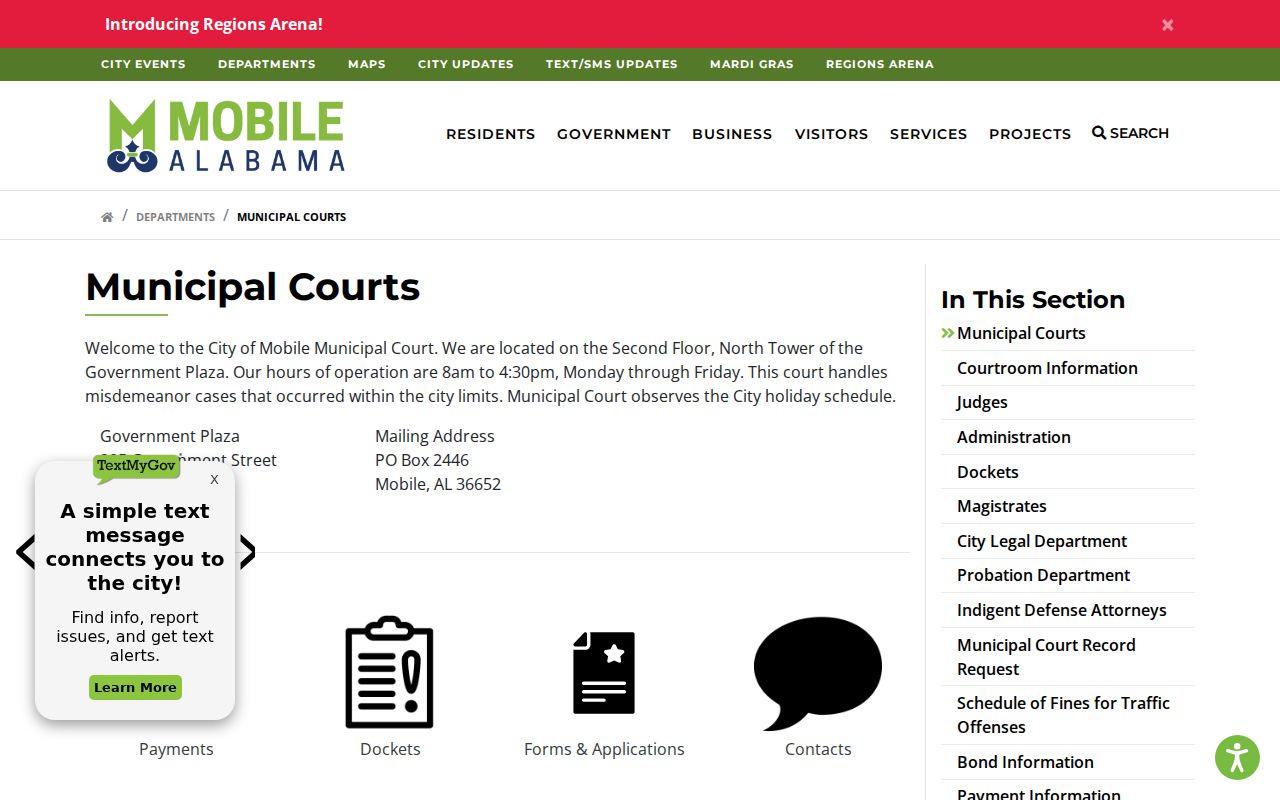
The municipal page marks a separate city-court channel rather than a Circuit Court file, one Mobile County readers should note. Its magistrates handle sworn complaints.
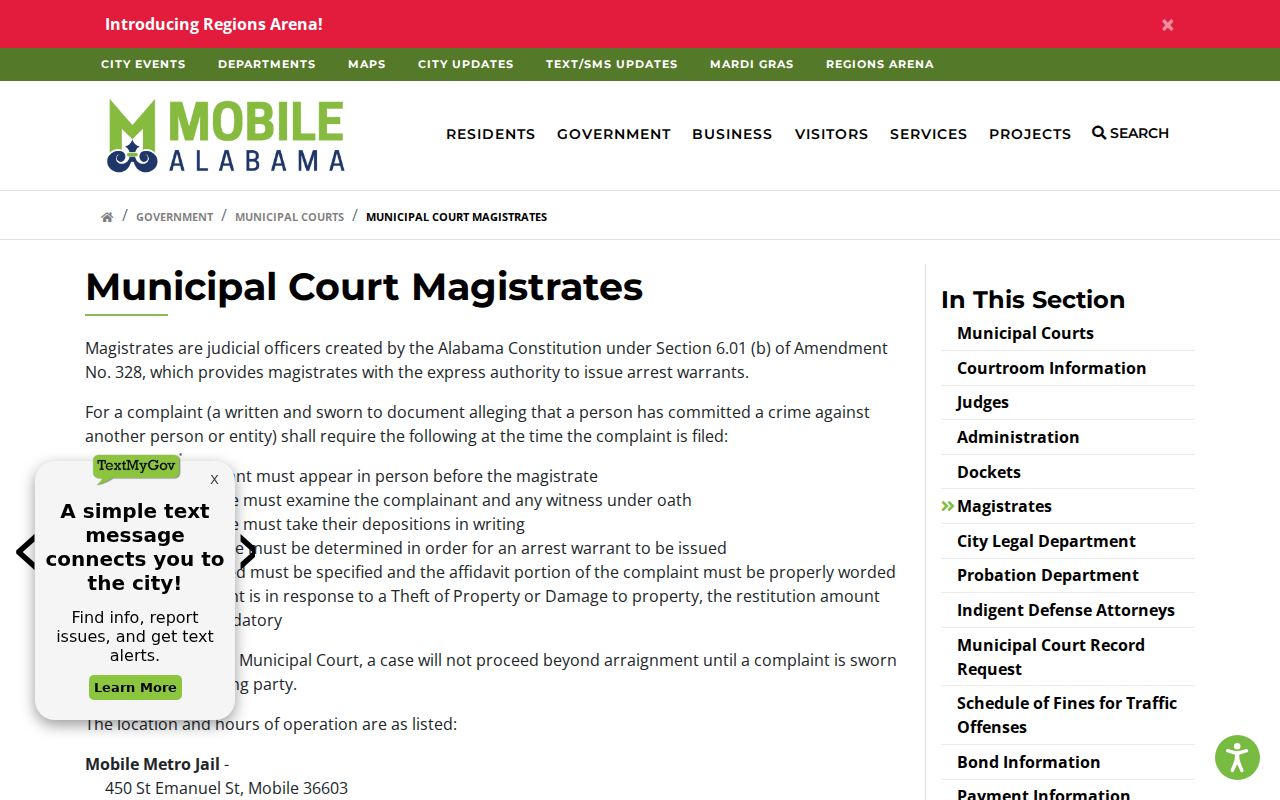
It connects Alabama's probable-cause rules with Mobile County municipal process.
Confirm Mobile County Warrant Status
When records disagree, treat the court's status date as a prompt to ask, not a final answer. Ask directly. Ask whether the Mobile County warrant is still issued, was executed, or was recalled by a later order. Is a bond, hearing, or appearance still open? That confirmation separates the warrant from booking, payment, and docket entries, and it gives counsel a clean source trail if the public page changes later. Write down the office, contact date, case identifier, and answer. Keep private identifiers out of public notes. The clerk can explain a judicial order, while MCSO addresses its service record, so a Mobile County question goes to whichever office owns that piece.