
The Mobile County Most Wanted Program
The Mobile County Sheriff's Office keeps no standing most-wanted page, no reward policy, and no set publication schedule. Its MCSO Crime Tips page and agency app are the official channels. Neither one promises a curated roster. Old posts and third-party lists should not fill that gap. A public alert serves one purpose: helping an agency gather information. It is not a court file. It also does not show every open warrant in Mobile County. This page links official systems only and hosts no names, images, or roster.
Mobile County Has No Confirmed Roster
No roster on the sheriff's site does not mean no alerts exist. The Mobile County Sheriff's Office may still post a Crime Tips notice when a case needs public attention. ALEA runs a statewide fugitive and alert search anyone can use. Both are narrower than a full Mobile County warrant search. Always go back to the original agency URL. An alert can vanish for many reasons. Arrest, surrender, recall, or simple site maintenance could each explain it. Only the responsible agency can state the current status.
How the Lists Work
A most-wanted alert is a handpicked notice. An active-warrant list tries to cover every unserved court command. Mobile County agencies pick alerts based on operational need, and they publish no selection rules or update cadence. Rewards and weekly refreshes are not guaranteed.
Note: A public alert is a dated snapshot; absence from it is not proof that no active warrant exists.
ALEA Alerts and Mobile County Warrants
The ALEA public fugitive and alert search lets you filter by last name, type, status, city, and state. It is the closest statewide public tool available. It is not a county-warrant repository. Alabama's Warrant Management Portal exists, but only authorized judicial and law-enforcement users can enter it. Check any alert against its issuing agency. A county court record, an MCSO service record, and a state alert can each describe one part of the same matter. Federal fugitive cases are separate and may involve the U.S. Marshals Service.
How to Report a Tip Safely
For emergencies, MCSO says call 911. For non-emergency tips, the number is (251) 574-8633. Mobile County has no confirmed anonymous reward program, so do not expect payment or guaranteed anonymity; give factual location details and let officers take it from there.
- Call 911 only when there is an immediate emergency.
- For a non-emergency tip, use the official MCSO channel.
- State the location and observed facts without confrontation.
- Follow the agency’s directions and step away safely.
Key Point: Report and step back; never confront, follow, detain, or try to confirm an online alert in person.
Mobile County Warrant Activity Context
An MCSO 2023 operational summary counted 332 warrant arrests by 200 Charlie Squad South. It names no one. The figure is not a current active-warrant total, a most-wanted roster, or a forecast. The MCSO app page offers outstanding-warrant access alongside other sheriff information.
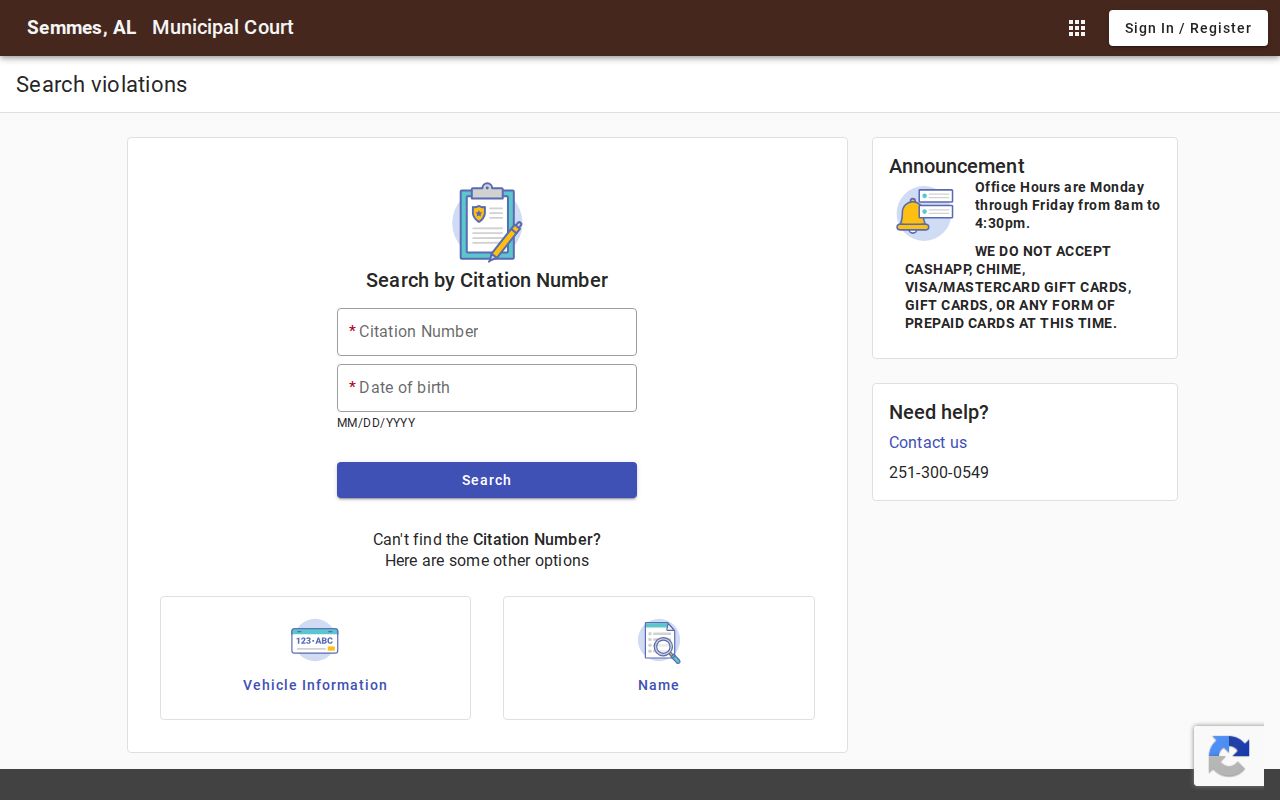
This court payment interface handles citations. It is no substitute for a Mobile County warrant list or a public alert.
Most Wanted vs an Active Warrant
A selected alert gets extra public attention. An active warrant is simply an unserved court command. Most Mobile County warrants never become alerts, and a removed alert alone does not prove the underlying court record was recalled.
| Feature | Most Wanted List | Active Warrant |
|---|---|---|
| Scope | Selected public alert | Any current unserved warrant |
| Publisher | Responsible alerting agency | Issuing court or sheriff channel |
| Visibility | Public notice when agency chooses | May be searchable or restricted |
| Resolution | Agency and court confirmation | Surrender, bond, appearance, or recall |
Verify Mobile County Public Alerts
Before acting on any Mobile County wanted notice, confirm it with the agency that posted it. Check the publication date and current status, since names repeat and legal status changes over time. A call beats a repost every time. Skip private addresses, birth dates, victim details, juvenile information, and sealed material. The MCSO directory lists the Warrant Unit at (251) 574-8657. Only the issuing court can recall a warrant, so confirm there too.
If You Believe You Are on a List
Do not test an alert at a counter. A lawyer can ask the Mobile County Warrant Unit and the issuing court to confirm the warrant, its charge, the bond, and the right way to surrender. A planned response beats an unexpected arrest.
Important: Consult an attorney before acting; counsel can confirm status and coordinate voluntary surrender, bond, and court appearance.
Mobile County Clinics Were Resolution Events
Mobile held warrant clinics in 2024 and 2025 for eligible nonviolent misdemeanor and traffic matters. Two earlier clinics had resolved more than 2,500 active warrants, the city reported. Those dates have passed. The clinics were resolution programs, not most-wanted roundups. No 2026 clinic has been announced. Check current City Legal news and Municipal Court sources before treating an old release as open registration. The Satsuma traffic page shows a separate local compliance channel for Mobile County readers.
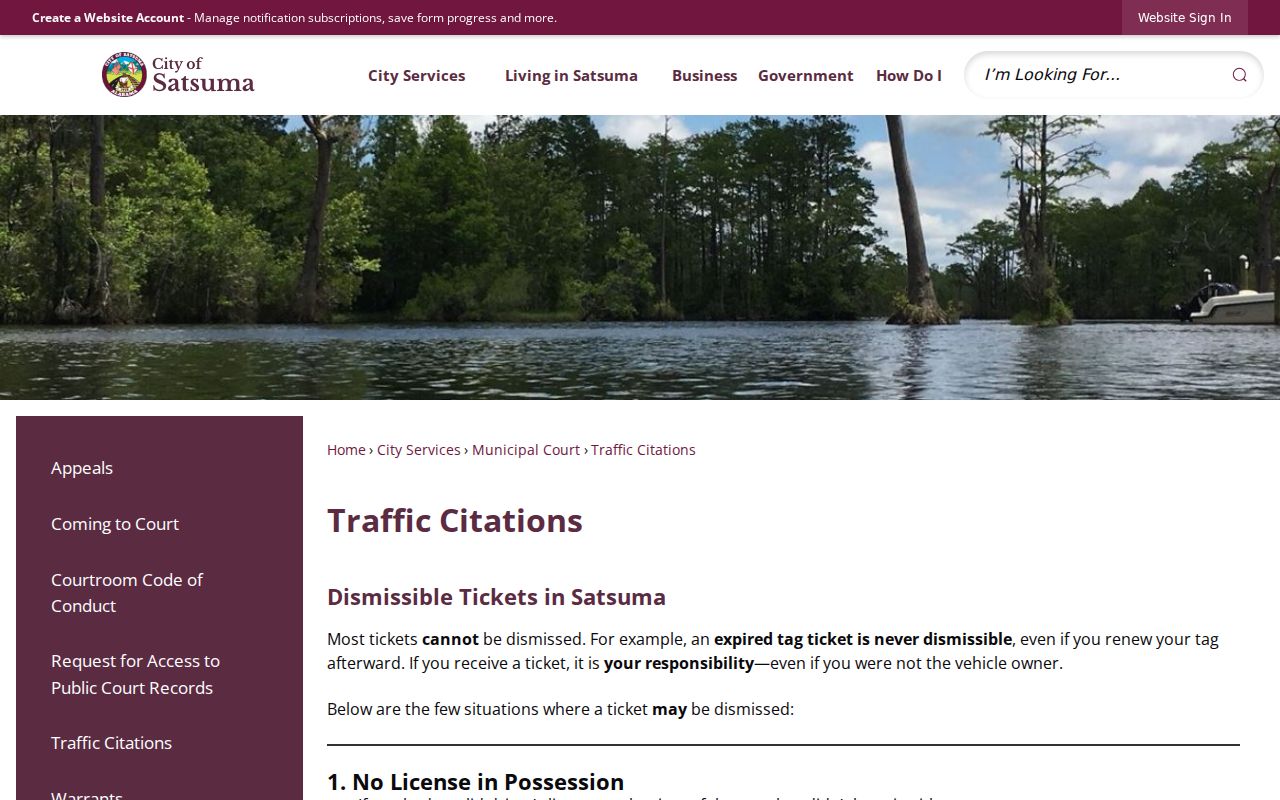
A court-compliance page is not a most-wanted roster, which is why Mobile County readers should always check the source label.
Mobile Alerts Are Not Court Judgments
An alert in Mobile County is an agency's word about a person's status at one moment, nothing more. Court outcomes change. Restricted records can also hide what the public may confirm. Before sharing any notice, check its date, its source, and the legal status behind it. The safe civic move is simple. Send a tip, or help a relative reach the correct court and counsel. Never stage an encounter over a listing.
Mobile County Alert Source Map
Each channel in Mobile County covers a different slice of the problem. MCSO Crime Tips handles sheriff information. ALEA posts statewide fugitive alerts. The issuing court alone speaks to judicial warrant status, and the U.S. Marshals Service takes federal fugitive matters. The channels overlap sometimes, yet none replaces the rest. A city police notice may involve a municipal warrant that never reached a countywide publication. For an ordinary warrant check, use the official MCSO warrant landing page, its app, the Warrant Unit, Central Records, and the likely court clerk. One caution. The embedded warrant form can go offline, so an unavailable page is not a clean result. For a tip, pick the emergency or non-emergency path that fits the facts. Publication restraint matters too. Do not save and circulate a person's image just because an agency once posted it. Link the current official source, and let the agency update or remove its own alert. That habit limits harm from stale status, mistaken identity, and changed court orders in Mobile County.
Official Portals Need Scope Labels
The Chickasaw citation search is an official municipal court tool.
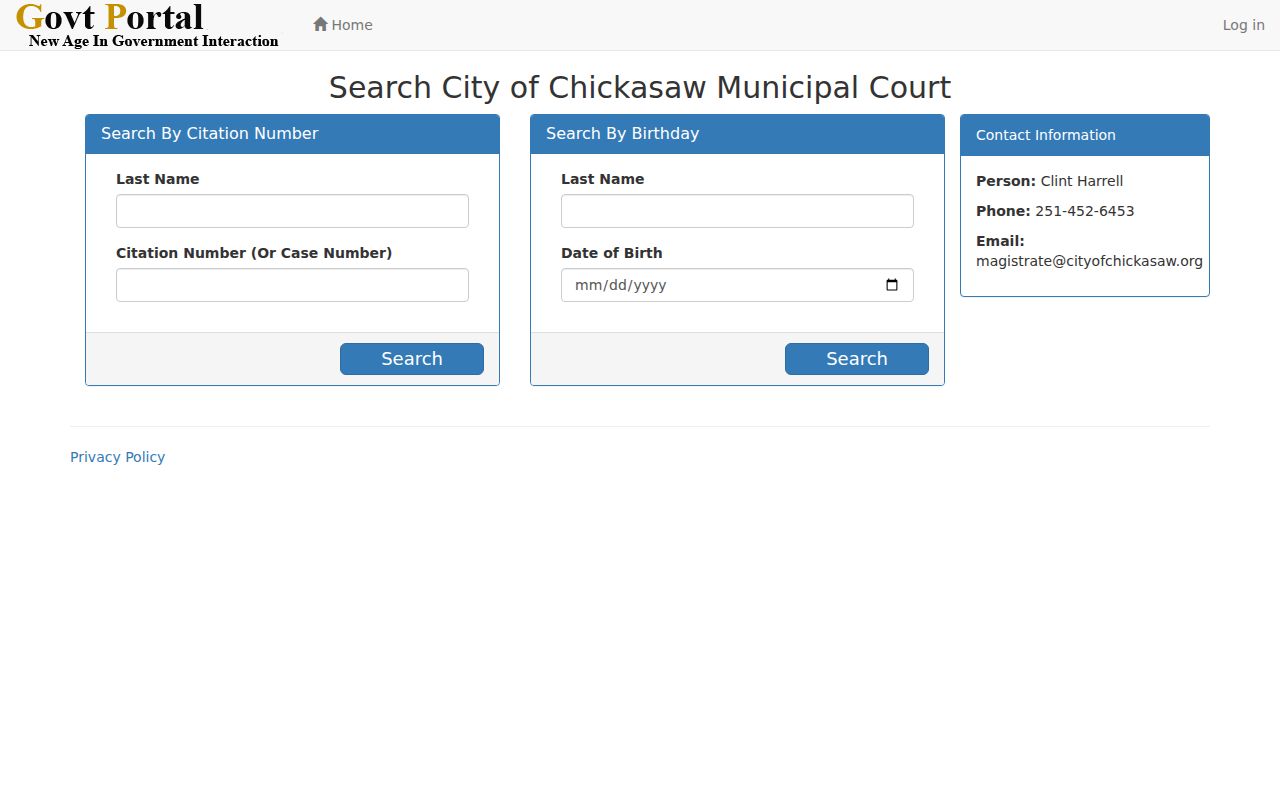
The portal digs through city citation and case data rather than any Mobile County most-wanted roster. Scope labels matter here, since they keep court compliance, active warrants, and fugitive alerts from blurring together.